A Perfect Way to Sustainably Increase Crop Yields


[From Maximum Soil & Water Productivity Pty. Ltd.]
A near-perfect way to manage cropping soils has been unearthed following paddock-scale research conducted over 15 years, across Western Australia, Pakistan and Queensland.
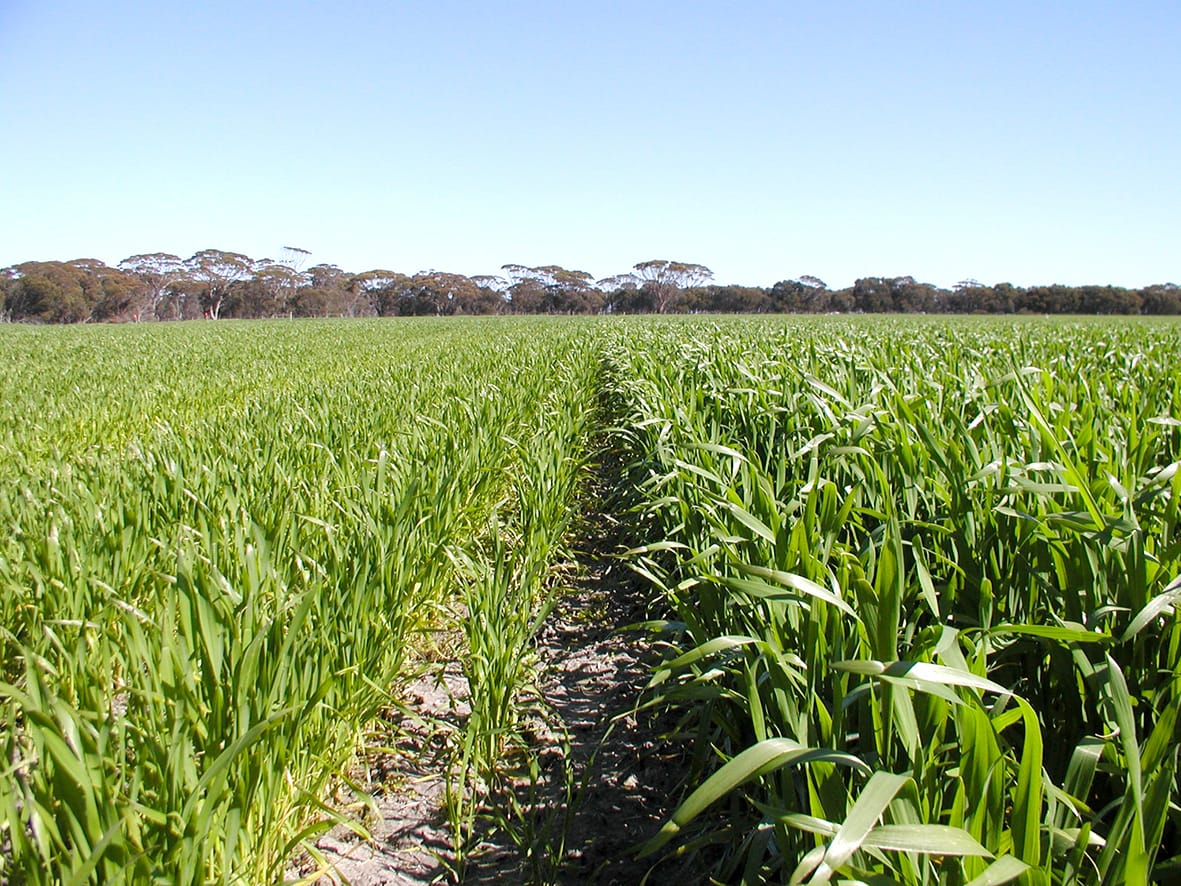
Data collected from 32 sites, included a wide range of soils and crop types, on both dryland and irrigation farms. This research produced average crop yield increases of 25%, within a range from 10% to 40%. (See crop growth photo.)
This improvement was achieved without adding to cropping operations, apart from an initial ripping to a depth of 300 mm. Thereafter, a specially designed machine, called a Seedbed Conditioner, attaches to the front of seeders and loosens soil to this depth without inverting it. This ensures all seeding operations thereafter remain as a one-pass operation which simultaneously refreshes the looseness of the 300 mm deep seedbed each cropping season.
Seedbed Conditioner
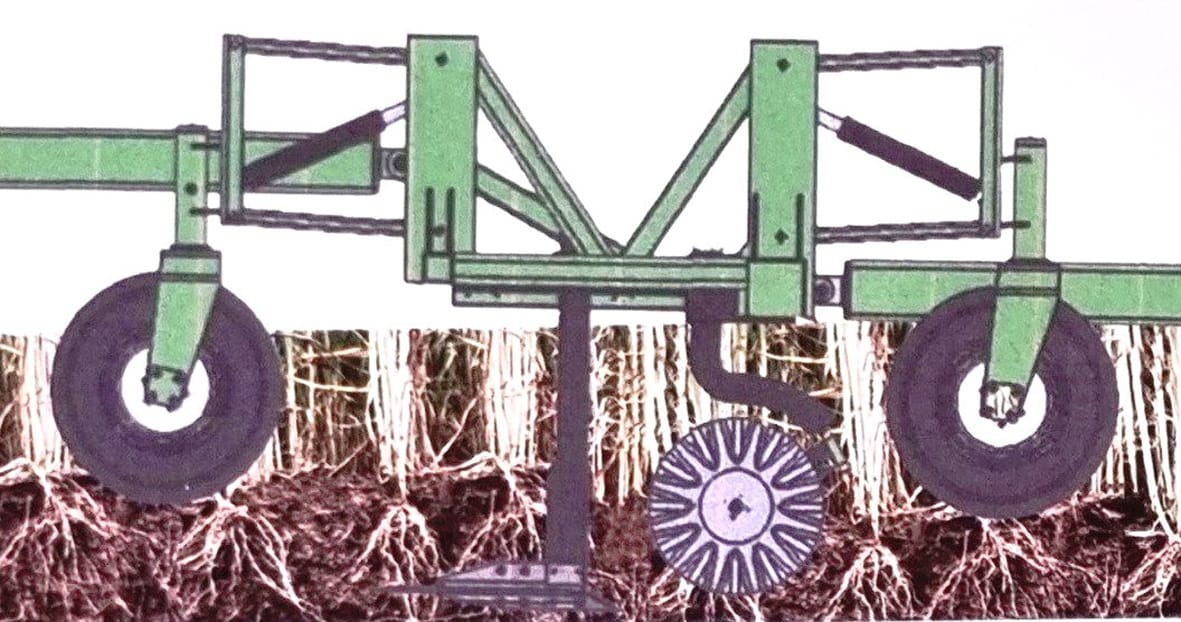
This machine slices through soil and roots at about 300 mm depth, lifting and dropping un-inverted soil and undisturbed root systems. (See photo of side view of machine.)
The retention of undisturbed, enlarged root systems allows the retention of all the soil micro- and macro-biology that surrounds roots, both of which combine to increase the load bearing capacity of the deepened seedbed, which in turn, facilitates the trafficability of deepened seedbeds.
The near-permanent deep and loose seedbeds created by Seedbed Conditioners was shown to substantially improve soil water, air and temperature properties.
The soil’s water movement and conservation properties increased to the extent that the soil’s drought resilience was increased by close to 300%, compared to that of a No-till seedbed.
Likewise, the deepened seedbed’s waterlogging resilience was increased by about 280% over that of No-till seedbeds.
On irrigated soil, subbing (lateral movement from furrows to bed centres) was 2 to 4 times faster, application times were 2 to 4 times shorter, 3 to 4 times more water was stored in 300 mm deep beds, and 20-30% less water was required per irrigation, all compared to normal cultivated beds.
Surface soil temperature extremes were moderated. Surface soil was cooler in summer and warmer in winter.
Improved Soil Properties
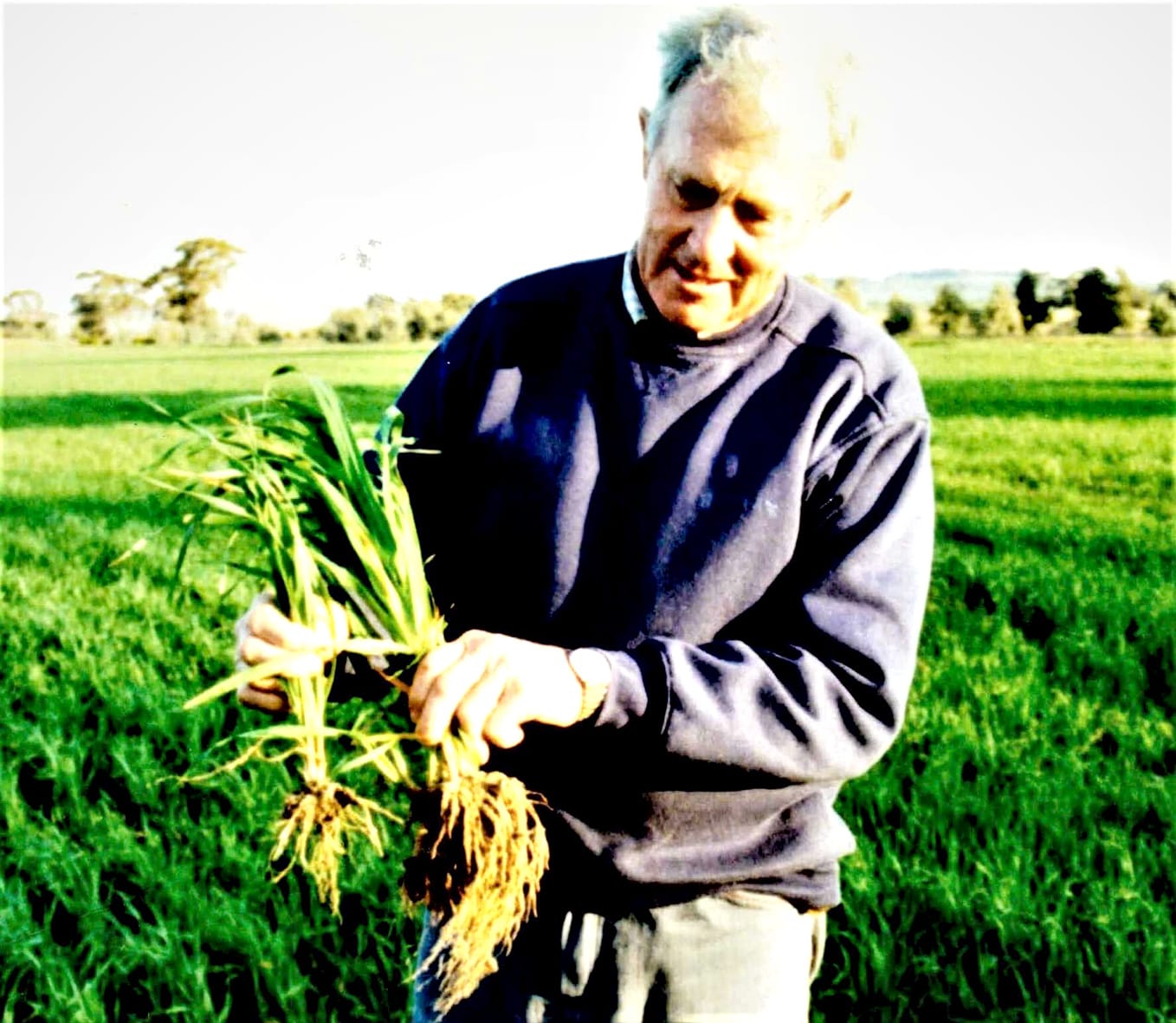
The consequence of these improved soil physical properties was that roots systems grew larger and proliferated more than in normal seedbeds. Data showed that root growth in deepened seedbeds increased by 30%, on average, which roughly accounted for the average yield increase of 25%. (See root growth photo.)
On a 100 ha paddock over a six-year cropping program, soil organic matter and soil carbon increased by 50% (or 28.4 t/ha/300mm soil depth) and soil nitrogen increased by 35% (or 11.3 t/ha/300mm soil depth).
Over the 6-year cropping program this measured increase in soil carbon was valued at $3.85 million/1,000 ha of crop, based on the February 2026 Carbon Credit Unit price of $37/tonne.
Similarly the value of this amount of increased soil nitrogen, based on a Urea fertiliser price of $1,500/tonne, amounts to $31, 800.
A further consequence of the increased organic matter in this soil was an increase in the soil’s nutrient holding capacity of 63%, because the nutrient holding capacity of organic matter is in the order of 300% larger than that of soil, and a decrease in the sodicity (exchangeable sodium percentage) of 16%, which, combined with the organic matter, increased the stability of soil structure and removed the need to treat the soil with gypsum.
Complementary Benefits
The improved soil conditions measured in this research have even more unquantified but complementary benefits, such as lessened weed burdens (due to a drier soil surface) and fewer soil-borne diseases (due to the well-aerated root zone).
The elegantly designed Seedbed Conditioner machines are very energy efficient. They require 50% less HP(KW) than a no-tillage machine and when attached to the front of a no-till seeder, the energy saving is even greater at approximately 75% less, because the following seeder is in soil freshly loosened by the preceding Seedbed Conditioner. (See overhead photo of tractor, Seedbed Conditioner and seeder.)
Deepened seedbed technology makes both dryland and irrigated cropping easier, less costly, more productive, more sustainable and environmentally beneficial.
The Seedbed Conditioner machine is patented and there are a full set of engineering drawings available for its manufacture. Its availability awaits purchase orders from farmers to initiate its commercial manufacture. Manufacturing companies will only begin to manufacture and sell Seedbed Conditioners once orders for it are placed by farmers.
Greg is keen to travel and present and discuss all of his data on this technology with farmers and farmer Groups. For further information, visit website maxswp.com.au, or contact Greg directly on 0481 764 070 or by email at gjhamiltong@gmail.com